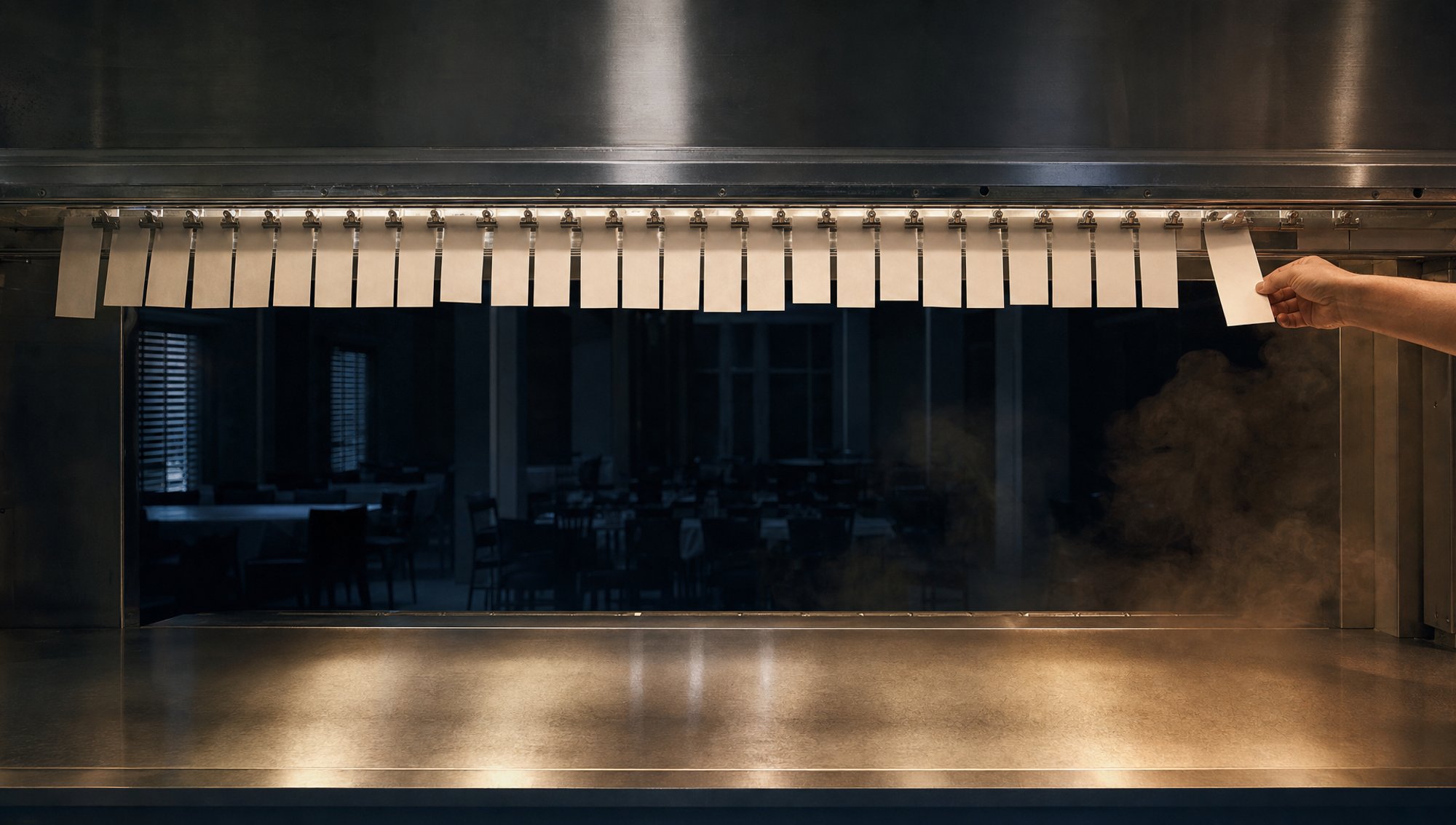
THE RAIL · ORDERS ARRIVE WHETHER ANYONE WATCHES OR NOTFILMED BY THE LINE, TONIGHT
RBI EMEA has asked partners for an AI Content Hub: always-on, platform-native, governed. This document is how we move forward on it. Everything below is drafted in the voice we would ship to them, built with the line working, and then annotated in the margins with the internal layer: the technical machinery opened up, the regulatory homework with dates, the economics mechanics, how we win, and the decisions still open at our own table.
A toolkit is a stack: cut, counted, finished. The feed is a ribbon: it never stops printing. Briefing an agency for every social asset is answering a ribbon with stacks. The hub is the machine sized to the ribbon.

TikTok usage among QSR operators went 26% to 48% in a year. The platforms rewarding that shift pay for frequency, nativity and diversity of format, not production value. The scoreboard changed; the production model didn't.
You cannot brief an agency every time you need a social asset. Agency economics price a stack: brief, decks, rounds, delivery. The feed orders one asset at a time, all day, and the overhead drowns the order.
The gap gets filled badly or not at all. Markets improvise off-toolkit, or go quiet between launches. Both cost brand equity. A hub is not a nice-to-have; it is the missing station on the line.
Their own numbers say TikTok QSR usage doubled in a year; Yum's Byte platform pushed 200 million AI-generated communications in 2025. The category is arming and their brief is the procurement moment. Whoever wins H2 writes the 2027 operating model recommendation, which is to say: chooses their own successor. That asymmetry is worth more than the H2 fee and prices D3 accordingly.
Not a philosophy, a rota. The hub runs like a kitchen: a weekly rhythm that never changes, and a sprint arc mapped to the exact phase table in your brief, closing with the recommendation your MVP exists to produce.
Brief intake with your comms lead. Calendar sync with the media plan. The week's orders go on the rail, tiered green, amber, red.
Adaptation waves fire: formats, markets, composites. Creator packs go out with consent scopes and disclosure blocks already inside.
Second wave plus creator returns land. Everything that arrives walks the line: adapt, govern, curate.
Governance day. HFSS step, claims check, disclosure audit. What fails is spiked and logged, not argued about.
Review at the pass with your team. Ledger printed: cost and cycle time per asset. Next week's mise en place agreed before anyone leaves.
The Monday-to-Friday rhythm is one full producer plus roughly a half-time bench draw at H2 volumes, and sprint zero's legal pack is about two working days because the inventory already exists in this document. The open question is not capability, it is D4: who fronts it against the current slate load, and what backfills them. That call gates every promise on this page.
The brief ends with five questions for potential partners. Each ticket opens with the verdict, then prints the full working underneath: the lessons, the staffing, the legal pack, the rulebook, the ledger columns. Nothing held back for the meeting.
"Which operating model best fits our brief?"
Studio chassis (your 2), embedded economics (your 1), creator lane governed from day one (your 4), graduating to your 3 in 2027 if the volume proves it. Model 5, permanent headcount, waits for proof. Your own watch-out column already argues this; we are agreeing with your table, not flattering it.
Your model 1 risk says the capability leaves with the person. It does not when the capability is a line the person operates.
"Could you provide the contractor resource, studio partnership or creator network access, and on what basis?"
Contractor basis or studio basis, the offer is identical: one producer at your pass, the line behind them. Week one arrives with the working pipeline you can operate below, governance scaffolding switched on, a creator briefing kit, and the ledger that gives every asset a cost and a cycle time.
The MVP is a learning sprint, so the learning is the deliverable: one campaign in, three or more platform formats out, and a written 2027 recommendation to close, including the parts we would not sell you.

"What AI tools and workflows do you use, and what would you recommend for a QSR brand context?"
Five stations: intake → adapt → govern → curate → ship. Govern is a blocking gate, not an advisory step. And this page is deliberately vendor-silent: your brief says no tool is assumed permitted until legal confirms it, so the named inventory, with licensing and indemnification posture per tool, goes to your legal team first. If a tool fails review, the station stays and the tool swaps.
"How do you approach AI content governance for food brands specifically, what are the non-negotiables?"
As checks that can stop a release, not a PDF that hopes. Rule zero is yours and we honour it in public: published food is never generated. AI builds the world around the plate; the plate is your identified source photograph, pixel-locked, every time. There is no generated food photography anywhere on this page, and the demo below prints that check on every asset.
Fail the pass, meet the spike, keep the record.
Every brief carries every person's consent scope. No scope on file, no adaptation.
Required brief fieldLicensed or commercially indemnified only. Your approved audio list is an H2 deliverable.
Approved-source allowlistGreen adapts freely. Amber needs sign-off. Red is locked: claims, product representation, market legal.
Tiered master packagingNothing publishes without the children and HFSS step, UK rules first, tuned per market.
Pre-publish gateASA and local disclosure ship inside the creator pack and print on the demo below.
Disclosure block per marketLabelling position per market, reviewed quarterly, ready before a regulator asks.
Tracked position registerThis is how our own studio already runs: releases are blocked by automated checks when copy or assets break house law, and this page passed those gates to go live. The spike above is not a metaphor we bought. It is the policy we run.
"What commercial models have you seen work for embedded or agile content studio arrangements?"
Flat monthly fee for the capability; tool and generation costs pass through at cost, capped, line by line in the ledger. The MVP exists to learn true cost per asset, so the structure must measure it, not bury it in a blended rate.
The analogue your brief already cites. Right for the embedded team, once H2 defines the volume.
Defined waves at a fixed price, for cornerstone mini-campaigns where scope is known.
Rates belong in a conversation with volumes on the table. The structure and the measurement discipline do not wait for that conversation; they are above, in writing.
Platform-native is just form-native. Same scene, fourteen physical disciplines, all made by the line across two nights, the second wave pushed deliberately further out. The brand truth never changes; the craft that carries it always can. This is the range a hub needs so the two-hundredth asset is not the first one photocopied.





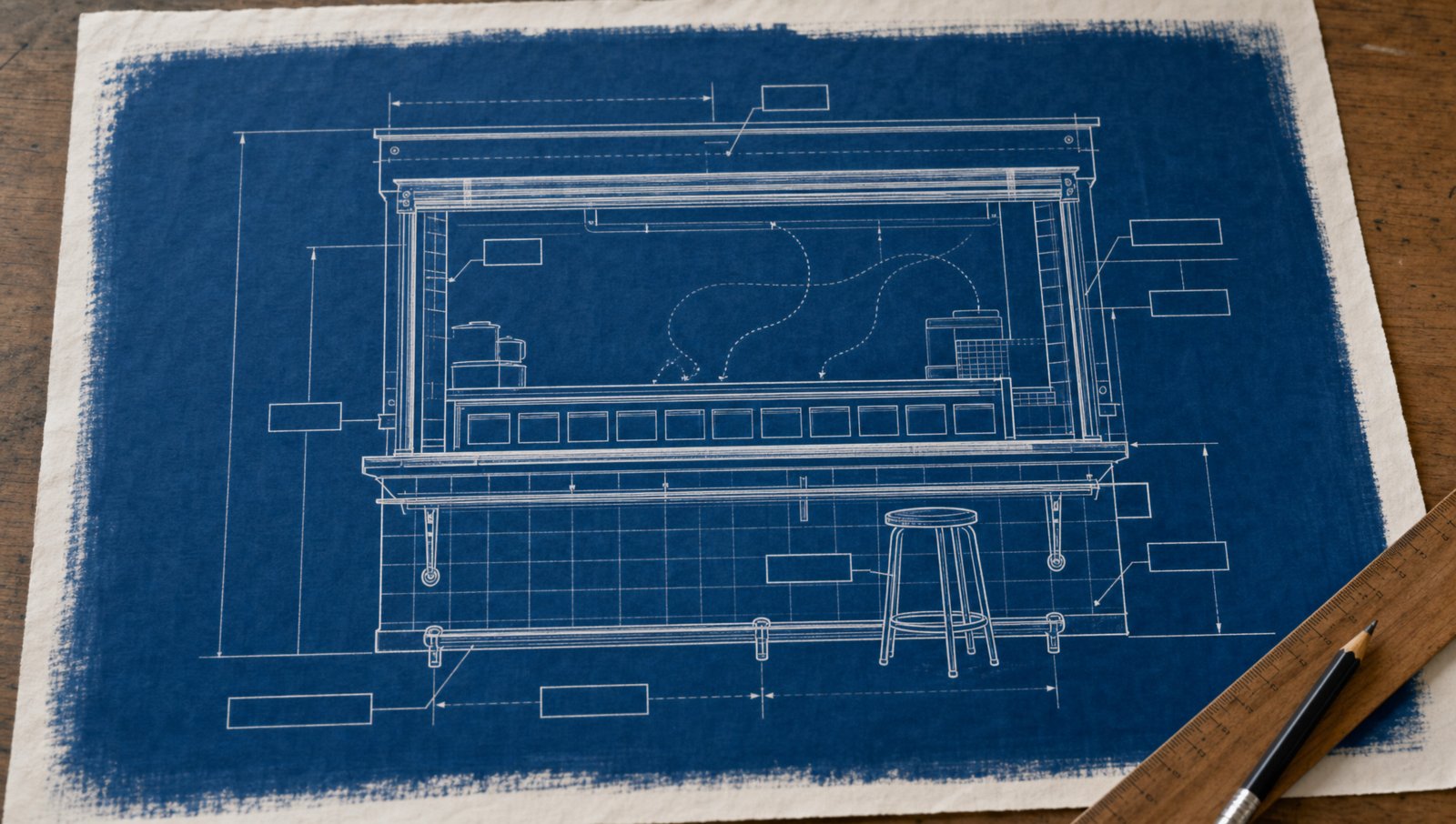
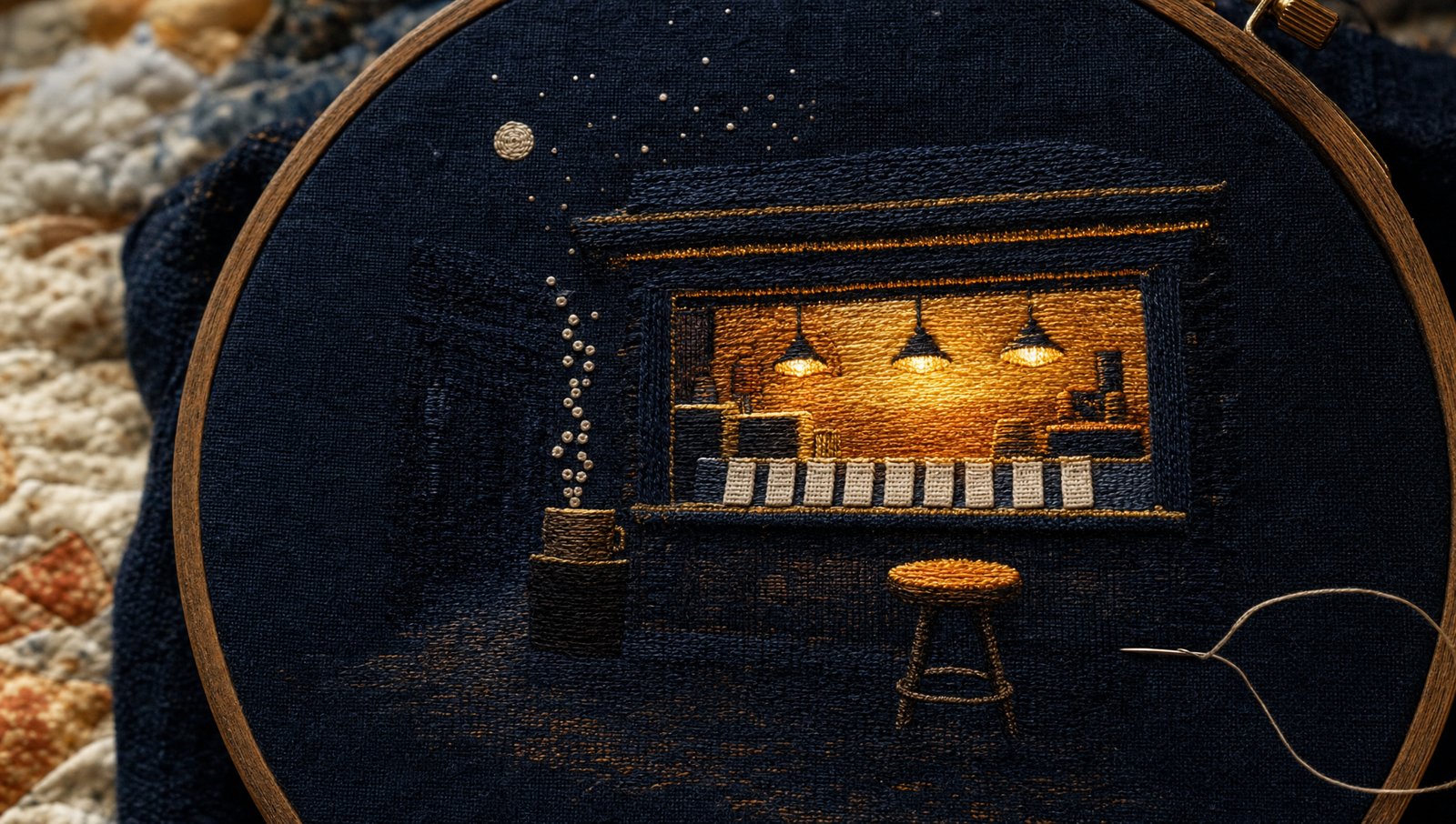


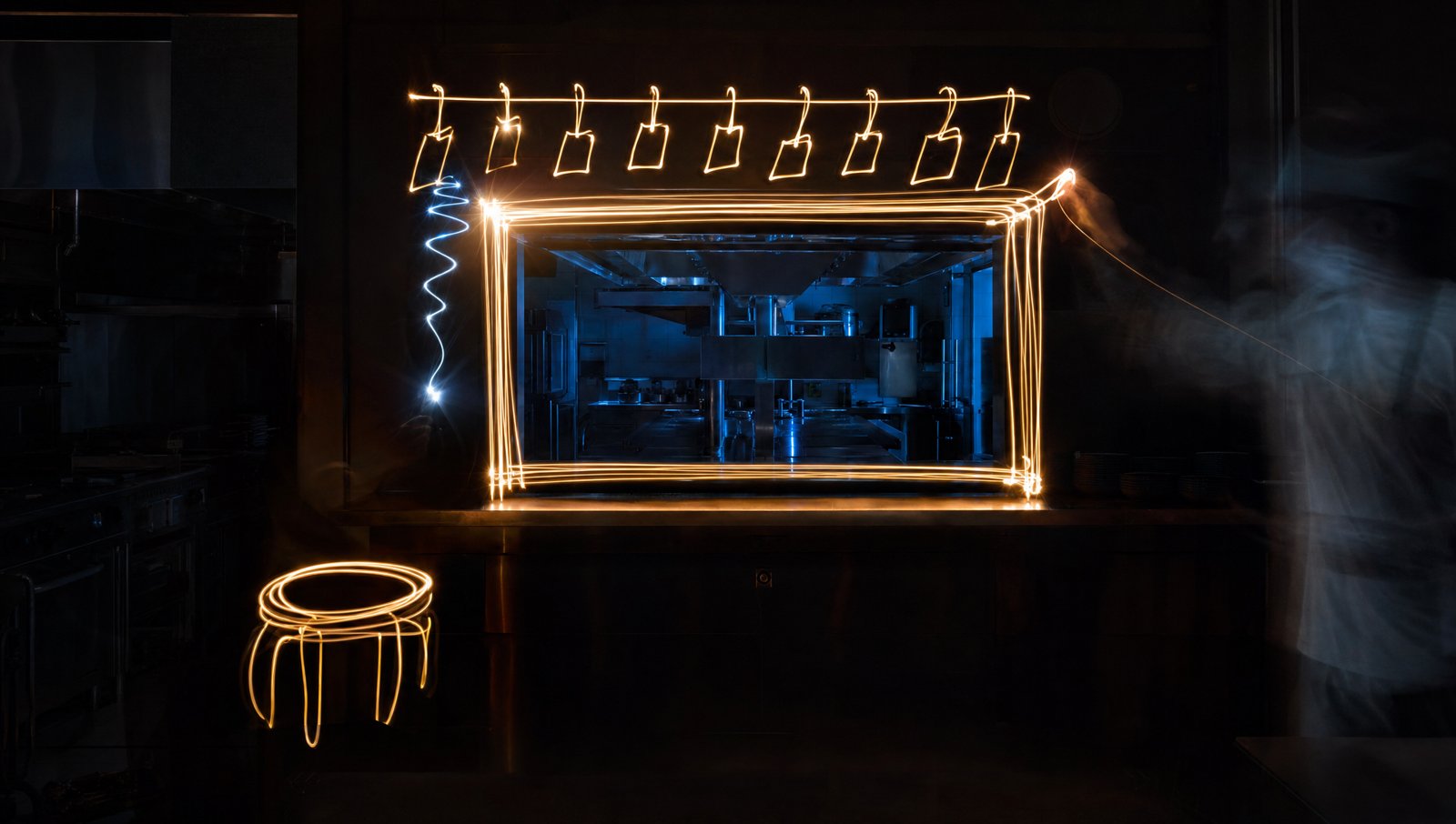
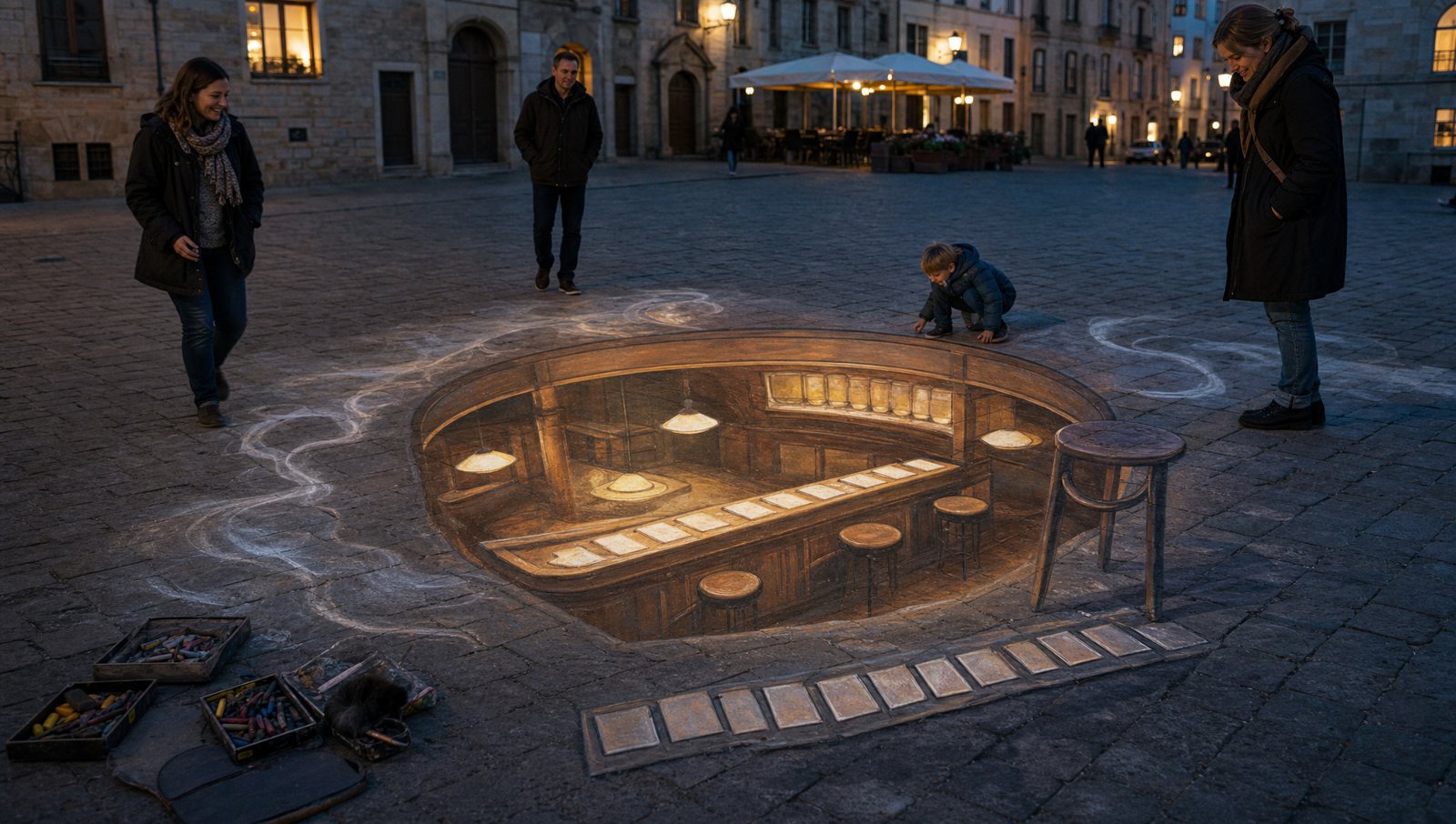
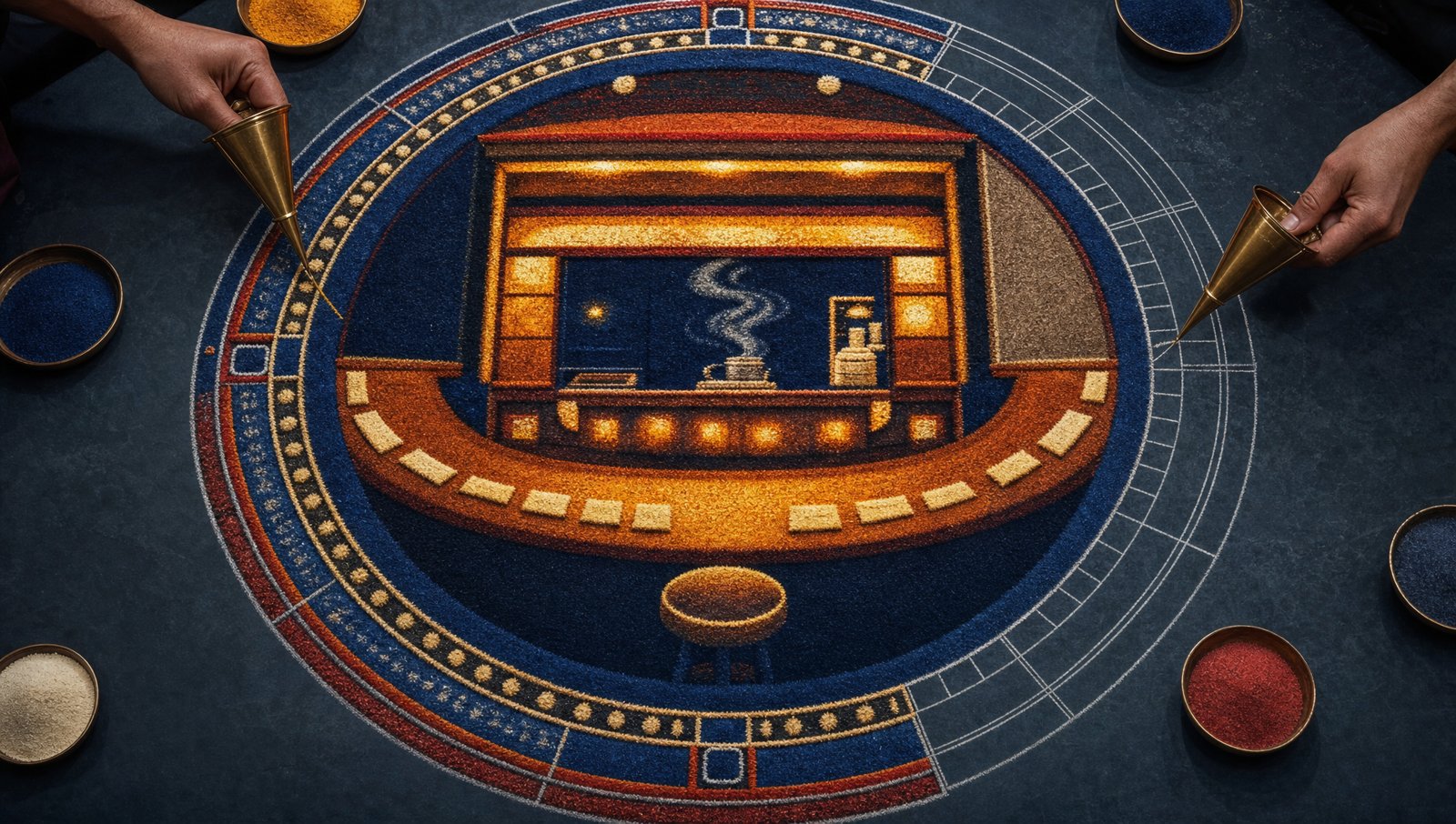
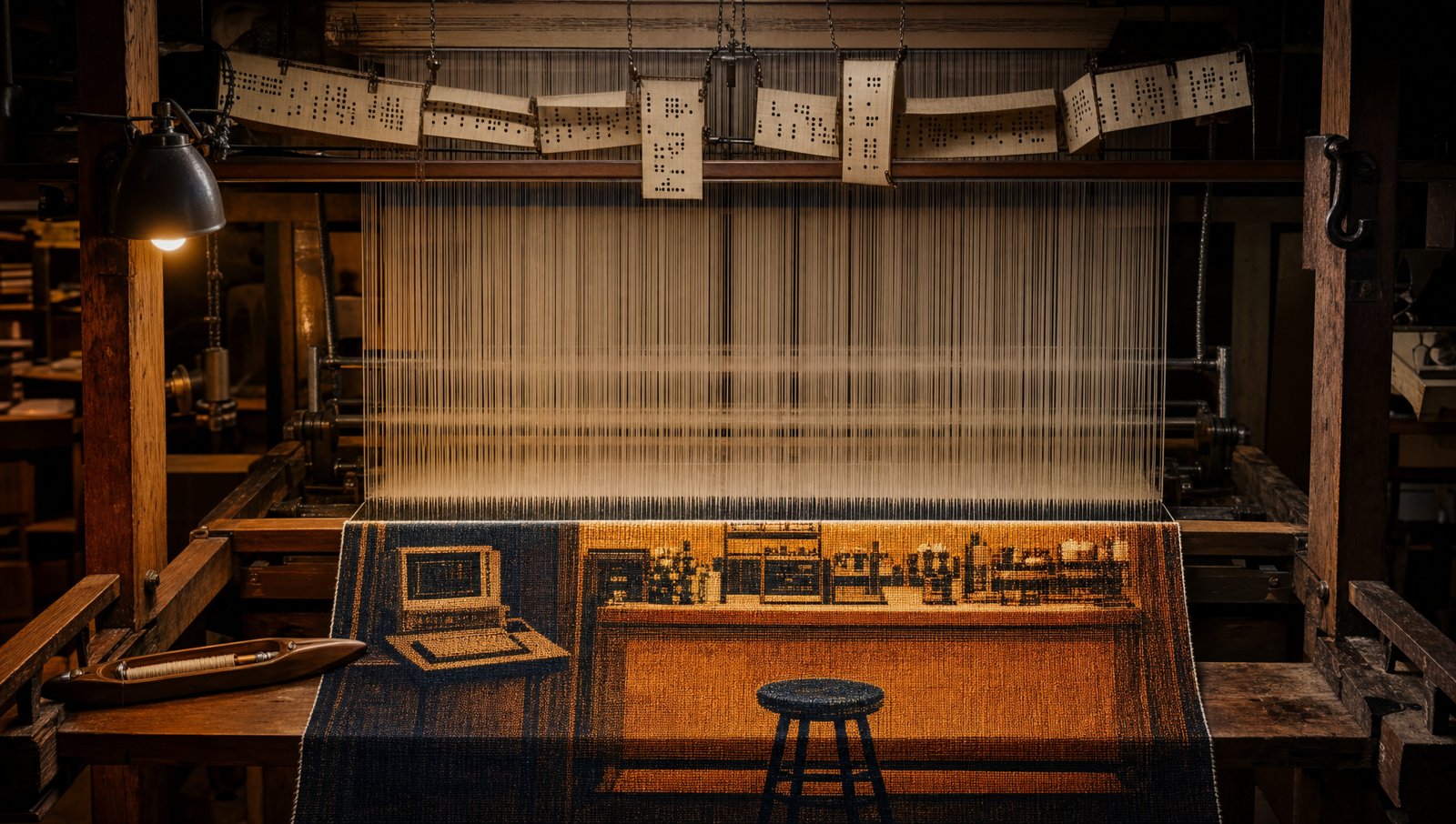

The mandala and the loom argue the always-on thesis by their nature: made perfectly, remade on schedule; an image arriving one row at a time, driven by punch cards, the first programmable media. Lead with those two plus neon and woodblock; shadow theatre and light painting are the reach pieces that prove the ceiling. The client cut shows eight of fourteen; the rest stay in the vault for the meeting.
No other response will hand you the machine. Pick a market, a format, a placement. Watch the asset assemble and the checks print. Eighteen compliant assets live in three image files, because type is a layer, never pixels.
The vertical is not a crop. The 9:16 plate is a world extension grown around the same locked scene, because cropping amputates and extending doesn't. In production the SOURCE line prints one thing only: your identified food photograph.
| Asset | Source | Method | Locked | Checks |
|---|---|---|---|---|
| World plates ×5 | Line engine, tonight | generate (concept) | n/a | no text · no marks · no food · reviewed |
| Range wall ×8 | Line engine, tonight | generate (craft study) | one shared scene | no text · no marks · reviewed |
| Films ×3 | Plates W1 / W3 / W6 | reference-anchored motion | composition + subject | frame QA · audio present |
| Vertical plate | Plate W1 | world extension | scene + subject | no text · reviewed |
| Demo assets ×18 | Plates W1 / W6 | compose (type in layers) | image pixels | HFSS pass · disclosure per market |
Internal layer from here down. The client cut says five stations and stays vendor-silent. This is the engineering underneath: what actually runs at each station, what breaks there, and what catches it. Click through the line.
Working stack today: stills on a gpt-image-2 class engine, edits and world extensions on its edit variant with locked-region discipline, video on Seedance 2.0 reference-to-video at 720p (video lane parked for this document per our own call), all queued through oxen.ai infrastructure with sync-hold job discipline and full generation logs. Type never renders in-model; every legible glyph on every asset is a post layer.
If their legal rejects a tool: the swap bench is real: enterprise-indemnified image engines exist in the Adobe Firefly class, and the C2PA rail below is engine-agnostic by design. The station survives any single vendor dying. That claim is the whole reason the client cut can afford to be vendor-silent.
Their rule zero says every published food asset traces to an identified photograph. The industry has quietly built the exact rail for that promise: C2PA Content Credentials, signed manifests that travel inside the file. The ledger on this page is the human-readable view; the manifest is what machines read.
TikTok has read Content Credentials since January 2025, the first major platform to auto-label AI content from embedded metadata; over 1.3 billion videos labelled since, and labels survive download and re-upload. Meta reads C2PA on upload and shows AI-info labels. X began displaying credentials in March 2026. LinkedIn preserves credential chains.
The steering committee behind the standard is not a startup bet: Adobe, Amazon, BBC, Google, Meta, Microsoft, OpenAI, Publicis, Sony, Truepic. Capture-signing already ships in Leica, Sony, Nikon, Canon and Samsung hardware, which means their food photography can be born signed and our manifests extend an unbroken chain from studio camera to franchisee feed.
And the regulatory kicker: the EU AI Act's Article 50 marking duty arrives in days. The same manifest satisfies it. One rail, three jobs: their food rule, platform labels, EU compliance.
Research layer, verified this week. Every row is a live or incoming obligation in the hub's first markets, and every row already has a rail in the line. This is the homework their governance section says the hub must do; we did it before the engagement exists.
| Instrument | Status | What it demands | Our rail |
|---|---|---|---|
| EU AI Act · Art. 50 transparency | 2 AUG 2026 | Machine-readable marking of AI-generated or manipulated content; detection enablable. Fines to EUR 15M or 3% of worldwide turnover. Legacy systems get until 2 Dec 2026; no retro-labelling of older content. A Commission Code of Practice on AI content transparency stands as the voluntary compliance vehicle. | C2PA manifest on every asset = the marking; we align the hub to the Code of Practice from sprint zero. The obligation lands three days after this document; the first sprint runs under it. |
| UK · Less Healthy Food ads (HFSS regime) | LIVE | Paid-for online ads for in-scope less-healthy products aimed at UK consumers: banned outright, any time. Statutory force 5 Jan 2026; industry complied voluntarily from 1 Oct 2025. Brand-level ads exempt under the 2025 exemption regulations; CAP/ASA final guidance December 2025. 9pm TV watershed alongside. | The HFSS router splits asset classes at intake: product-visible vs brand-only. UK paid placements of product-visible assets hard-block; brand-exempt path documented per CAP guidance. This is a gate, not a memo. |
| France · Influencer law 2023-451 + Nov 2024 order | LIVE | Commercial content must be labelled in French, visibly, for its full duration. Retouched appearance requires "image retouchée"; AI-generated imagery requires "image virtuelle". Penalties to EUR 300k and two years. Influencer liability cover mandated. | FR packages carry French-language disclosure in the type layer, and any AI-assisted visual auto-carries "image virtuelle". Because type is a layer, the mention is enforced at packaging, not requested politely. |
| Poland · UOKiK guidance | LIVE | Two-stage labelling: platform tool plus manual Polish-language tag; English "#ad" ruled insufficient. Advertiser, agency and influencer all liable. | PL creator packs ship with platform-flag instruction plus #reklama in Polish baked into the disclosure block. |
| Türkiye · Advertising Board 2021 guideline + 2025 draft | LIVE | Disclosure via listed markers: #Reklam, #İşbirliği, #Sponsor, #Tanıtım. Hidden advertising prohibited outright. New tightening drafted November 2025. | TR disclosure block uses the listed markers verbatim; the draft rules sit on the quarterly watch list the client cut already promises. |
Nobody else responding to this brief will walk in with the Article 50 date, the UK brand-exemption nuance and the French "image virtuelle" mention already wired into gates. Their brief literally asks the hub to develop this rulebook through live experience. We are showing up with the rulebook's first edition already running. The client cut should carry this table minus this note.
Research layer. The QSR category is industrialising AI faster than most agencies have noticed, and RBI's own house holds the biggest consumer-facing precedent. Fluency in their precedent is table stakes for the meeting.
Consumers built their own Whopper with generative AI: photoreal image plus a personalised jingle, an AI guide named Grilliam, Media.Monks build. 1.3M+ new loyalty signups, a 36% app-visit spike, 3M+ Whoppers customised, winning recipes sold through as LTOs by December 2024. The house has already asked customers to generate food imagery at scale.
Proprietary stack across 25,000+ restaurants; over 200 million AI-generated communications in 2025, with claims of up to 5x incremental sales versus traditional approaches. The nearest competitor holding company is treating AI content as infrastructure, not experiment.
AI drive-thru expanded from 100 toward 500-600 locations through 2025, cutting service time and holding 99% order accuracy. Operational AI is normal QSR furniture now; content AI is simply the next surface.
Tech overhaul across 43,000 restaurants, AI drive-thrus, and a generative-AI "virtual manager" for franchisee admin. When the category leader gives franchisees AI managers, franchisee-facing AI content services stop sounding exotic.
Million Dollar Whopper generated food imagery for consumers while EMEA's brief bans generated food in published assets. These do not conflict: a consumer-promo toy under US governance versus published brand assets under EMEA rules. But someone in their room will raise it, and the answer above is the one we give, verbatim, without blinking. It also proves rule zero is a governance choice, not a technical limit, which strengthens their case for a governed hub rather than weakening ours.
Internal layer. No invented prices: this is the shape of the machine's economics, as mechanics. A line has a fixed weekly cost and a small marginal cost per asset; traditional adaptation prices every asset like the first one. Slide the volume and watch the argument.
The curve is the entire pricing argument for D3: a fixed embedded fee plus transparent passthrough gets CHEAPER per asset as their volume grows, visibly, in their own ledger. Blended day-rates hide this and holdcos depend on hiding it. Our structure weaponises the curve; theirs fears it. That is the one slide version if we ever need one.
Intent, in writing. One live toolkit moment in, a working proof of the whole line out, inside seven days. Small enough to approve without a committee, real enough to settle the model question with receipts.
Seven days is honest at current line speed: this document's own media set was produced in two evenings around client work. The constraint is D4 again, not the machine. If the photography pack stalls on their side, the pilot runs on brand-only assets under the UK brand-exemption path, which conveniently demonstrates the HFSS router live on their first engagement.

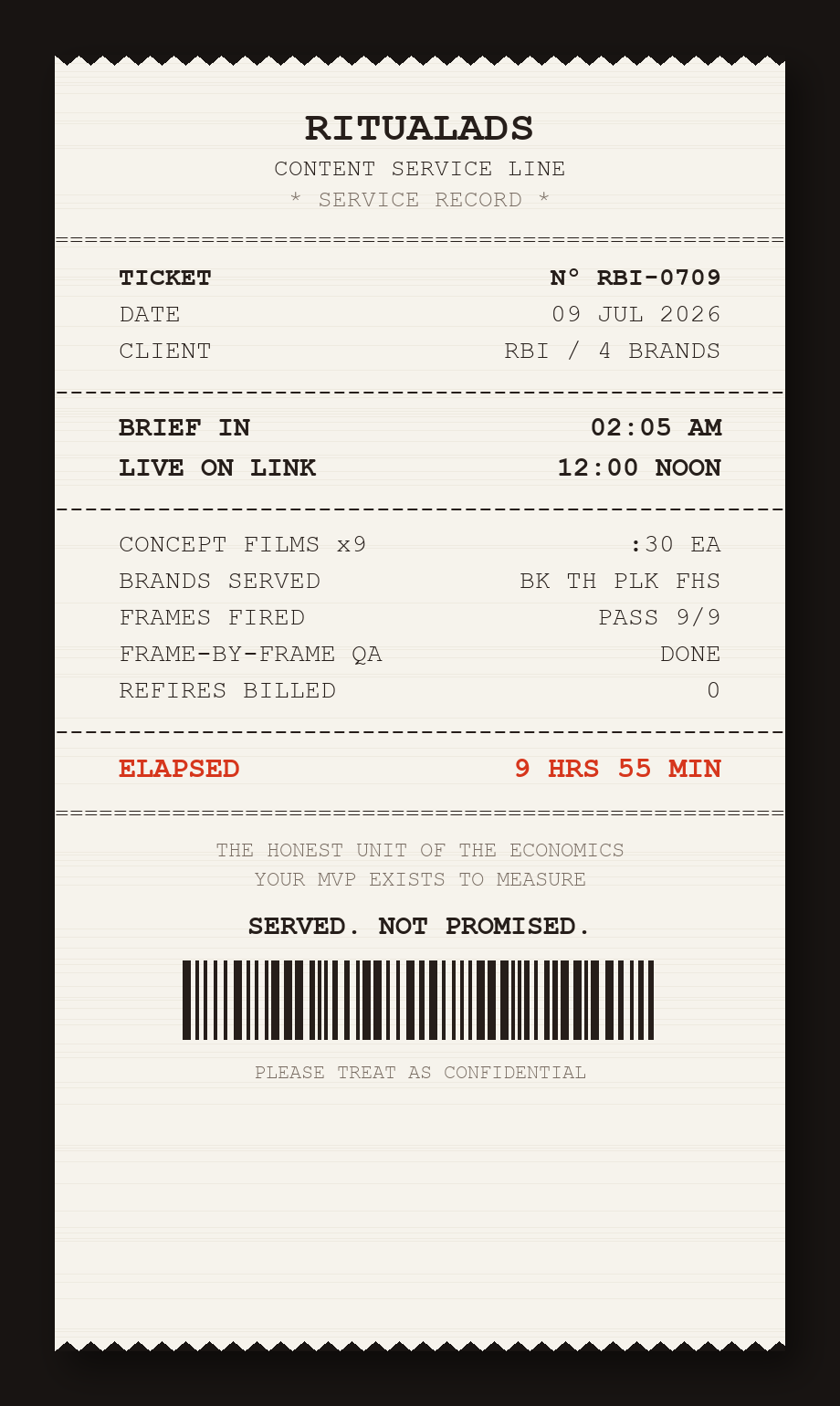
On 9 July a four-brand concept brief hit this line at 2:05 AM. Nine :30 concept films were researched, generated, reviewed frame by frame and live on this URL by noon. That receipt is the honest unit of the economics your MVP exists to measure. Tonight, the same line remade this entire page: sixteen new pieces between one evening and one deploy.
Concept work is where AI may imagine. Published work is where it may only adapt. The July slate is the first kind, kept on this link as evidence of the second kind's speed:
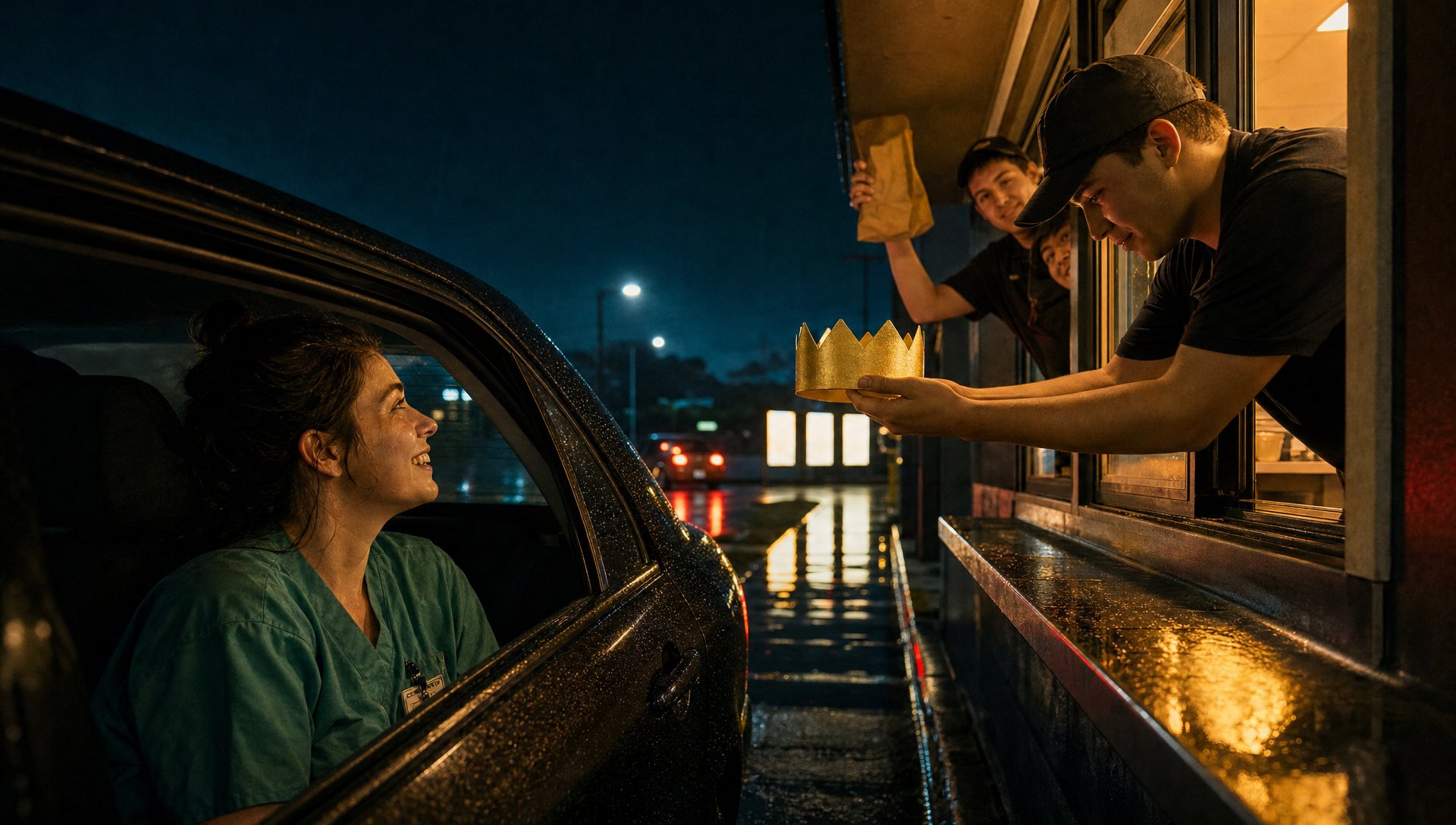


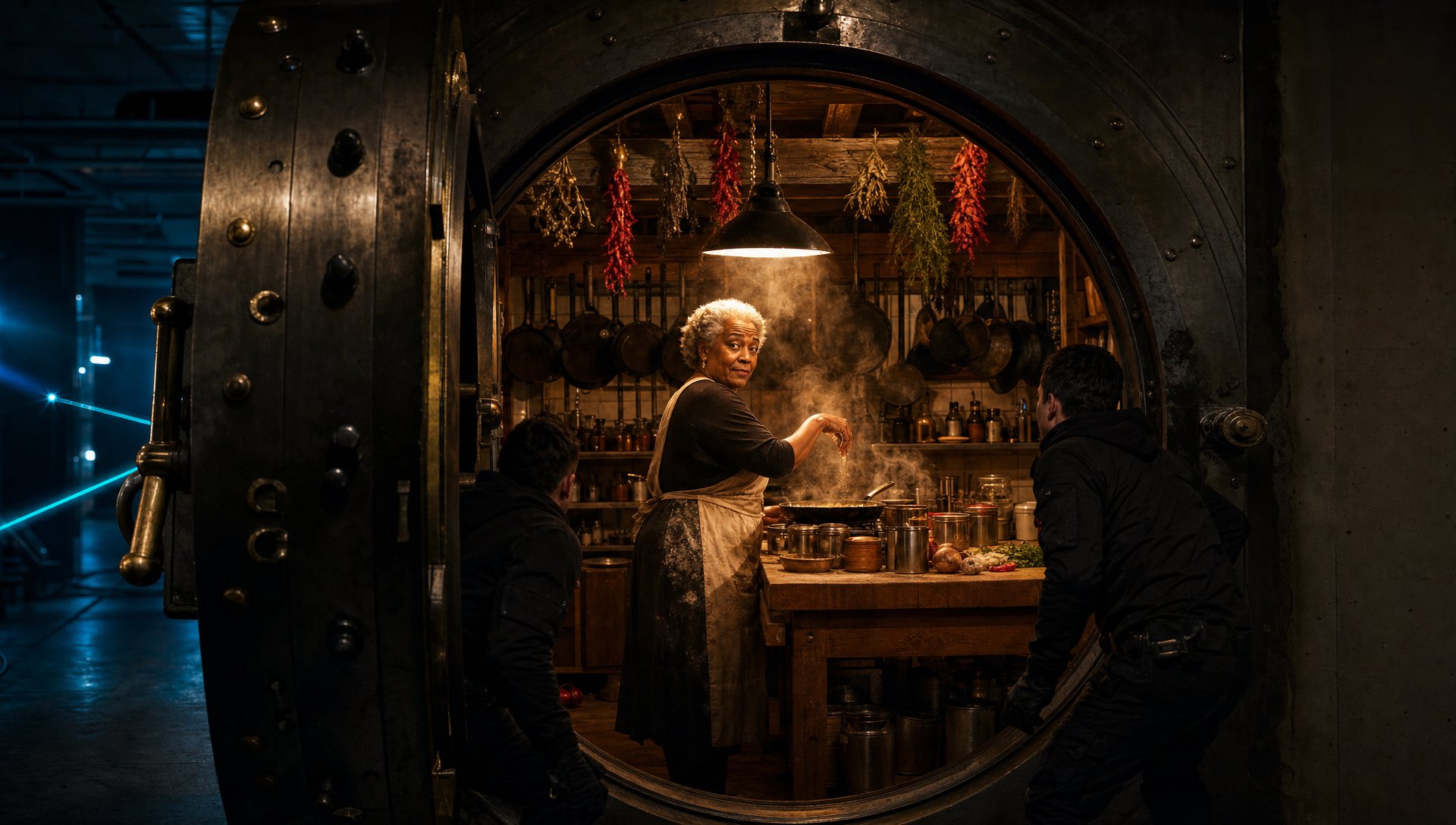
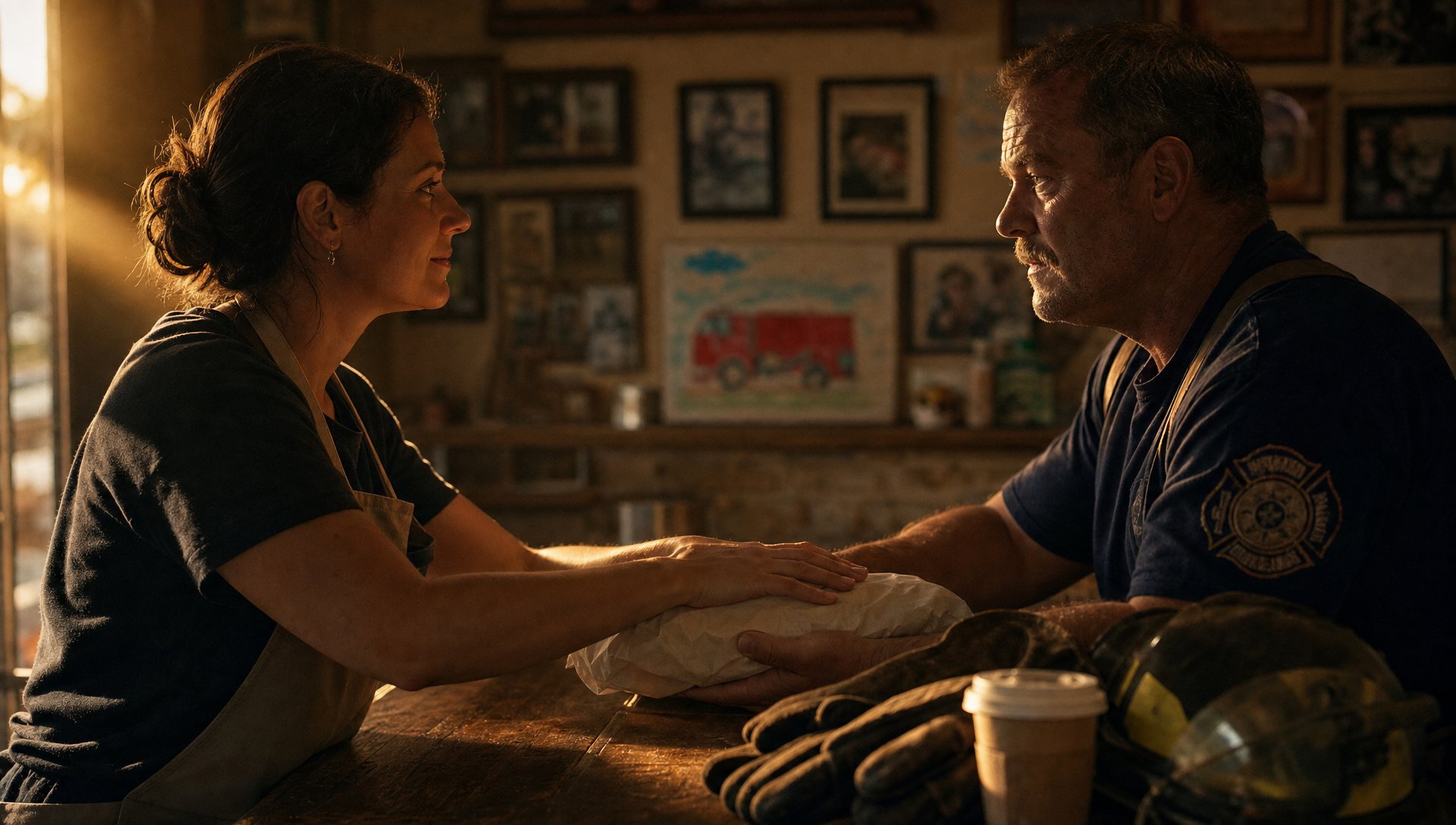
Your brief names the path: BK EMEA proves the line, then Popeyes, Tim Hortons and Firehouse Subs, then LAC and APAC, then possibly a franchisee service the way CRM already works. Masters are cut wide and layered so CRM, in-store screens and owned channels fall out of the same asset, and rights are cleared at the width of the ambition, not the width of the first post.





Two rails, one line: the brand path and the channel path from your brief. Nothing on either requires a rebuild, because masters are cut wide, layered, and cleared at the width of the ambition from asset one. The franchisee service at the end is the same motion CRM already proved: a capability the centre runs becoming a service the network buys.
Your brief asks partners what they would do differently. The honest version includes what we would refuse to do at all, because a hub that cannot say no is just a faster way to make mistakes.
The hub feeds placements; it does not plan or buy them. It integrates with the media team's calendar and hands assets over the pass. Two crafts, one line, no turf war.
Your brief says complement and we hold you to it. The big campaign idea stays with campaign production. The hub fills the space between pulses and feeds the toolkit media-native assets from the start.
Not in a hero, not in a story, not in a crop. If a deadline can only be met by generating the plate, the deadline moves or the asset dies on the spike. This is the one rule with no amber tier.
The close-out recommendation is written against the measured ledger, not against our commercial appetite. If H2 proves a smaller 2027 than anyone hoped, you will read that in our memo first.
Internal only, never ships. Who else answers this brief, what beats them, and where we are honestly thin.
Holdco agencies arriving with AI slideware and scale references; AI boutiques with strong engines and no governance story; consultancies with operating models and no craft. Nobody in that field ships receipts, range and a running rulebook in one artifact. This page is the differentiation.
Brief to nine films in ten hours, this document's media in two evenings. The receipt culture is unmatchable by committee structures and we should keep making it the argument.
The gate array, the C2PA rail and the radar with dates are not proposals; a version runs in our own studio daily. Holdcos will promise a governance workstream; we demo a governance machine.
Scale references against holdco case studies; EMEA entity, insurance and procurement paperwork (D5); on-site presence expectations across EMEA time zones; rate pressure from offshore studios. Counters: the pilot converts scale doubt into evidence, D5 closes the paperwork gap in parallel, and the embedded producer answers presence without pretending to be an office network.
The draft above is shippable. These six calls are not made yet, and each changes what the external version looks like. Recommendations attached so the discussion starts somewhere.
D1 · Route. Send the client cut of this page as the response, or request the meeting first and use the page live. Recommend: page first, meeting second; the page is the differentiation and it works while we sleep.
D2 · Vendor disclosure depth. The client cut stays vendor-silent with the legal pack offered; the named stack lives only here. Recommend: hold that line; it reads as discipline, not evasion, and their brief invites exactly it.
D3 · Pilot commercial posture. First service free as proof, or paid at a nominal fixed fee. Recommend: paid-but-nominal; free previs devalues the receipt culture we are selling, and a fee forces their governance chain to engage for real.
D4 · The named producer. Who fronts the H2 embed given current slate load, and what backfills them. Recommend: decide before any meeting; "the person arrives with a line" only lands if the person has a name.
D5 · Procurement readiness. EMEA entity, insurance certificates, data-processing terms, security questionnaire answers. Holdco competitors have this on tap. Recommend: assemble the pack now, in parallel, before it is asked for.
D6 · How much candor ships. Parts of this internal layer (the burn marks, the say-no list) are persuasive precisely because they are honest. Recommend: the say-no list ships; the win-room and economics coefficients never do.